


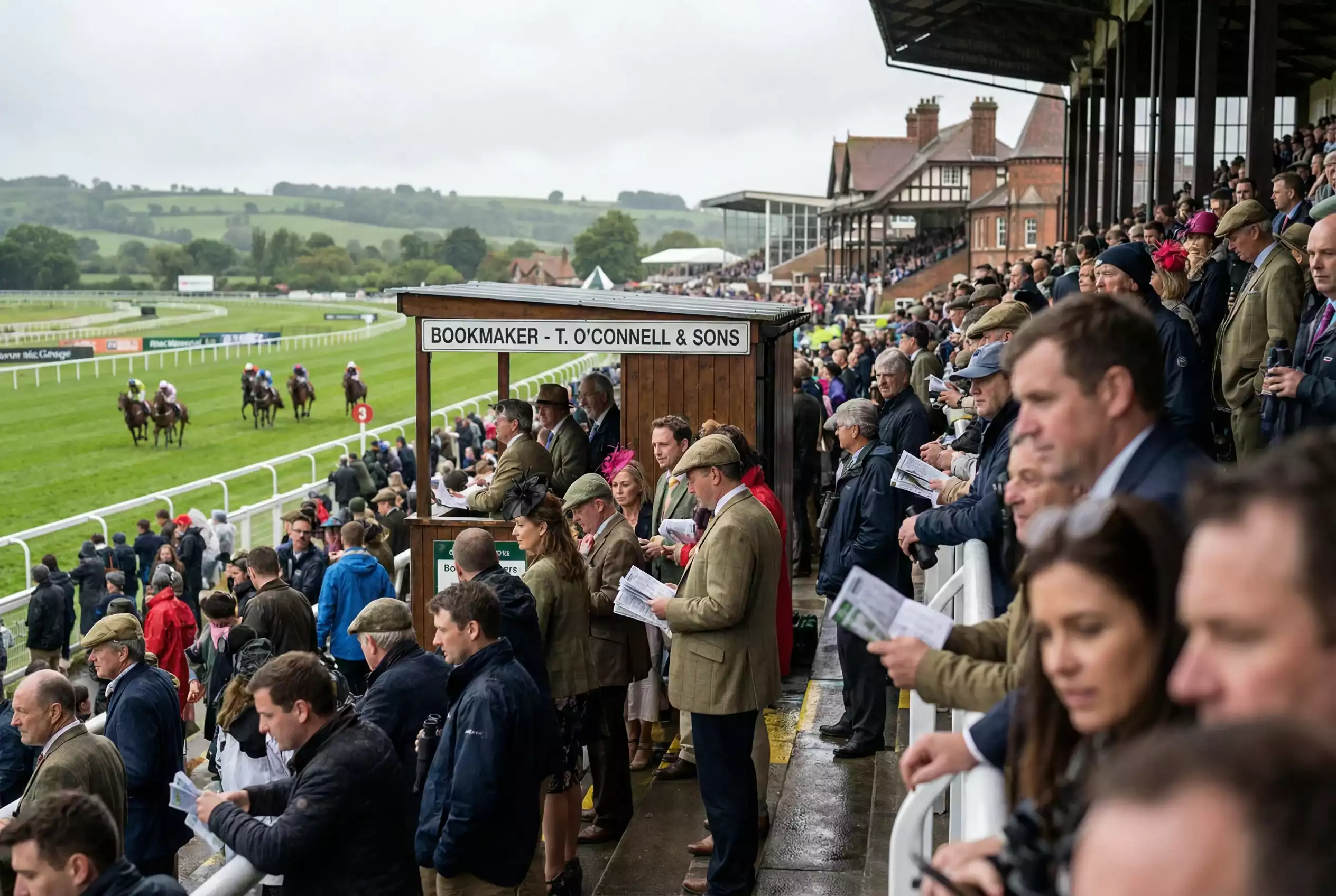
British horse racing occupies a peculiar place in the national psyche. It is simultaneously an ancient sport steeped in tradition and a modern betting market worth hundreds of millions of pounds. For punters seeking an edge, the challenge remains the same as it was a century ago: separating genuine insight from noise, and disciplined strategy from wishful thinking.
The numbers tell a story of enduring appeal. In 2025, annual racecourse attendance in Britain topped five million for the first time since 2019, with 5,031,640 spectators passing through the turnstiles according to Racing Post figures. That represents a 4.8% increase year-on-year, suggesting the sport's post-pandemic recovery has firmly taken hold. "2024's annual attendance figures demonstrate a year of consolidation, which is particularly encouraging considering the sport is in the midst of undertaking significant measures to enhance the product on offer," noted David Armstrong, Chief Executive of the Racecourse Association.
The betting side of the equation is equally substantial. According to the Gambling Commission's participation statistics, 7% of UK adults placed a bet on horse racing during April to July 2025, up from 4% in the January to April period. That seasonal spike coincides with spring festivals and the flat season's arrival, a pattern as predictable as the racing calendar itself.
Yet popularity does not guarantee profitability. Bookmakers hold a mathematical edge on every race, and the vast majority of punters lose money over time. The difference between recreational betting and profitable punting lies in strategy, discipline, and a clear-eyed understanding of probability. Data beats hunches. This principle underpins every successful approach to horse racing betting, from basic each-way selections to sophisticated exchange trading.
This guide takes a different approach from the typical betting advice found online. Rather than offering tips or claiming secret systems, it presents evidence-based strategies supported by academic research, industry statistics, and practical examples from the UK market. You will learn how to identify value in the odds, manage your bankroll using proven mathematical frameworks, and avoid the psychological traps that catch most punters. Whether you are placing your first bet at Cheltenham or refining an existing system, the principles covered here apply across all codes and conditions.
The British racing calendar in spring 2026 offers a rich testing ground. With the Flat season underway and major festivals approaching, opportunities to apply these strategies present themselves almost daily. The question is not whether edges exist in the market. The question is whether you have the knowledge and discipline to exploit them.
What Data-Driven Punters Need to Know in 2026
- The UK horse racing betting market generates £766.7 million in gross gaming yield annually, with 7% of adults placing bets during peak season, making it one of Britain's most active betting verticals.
- Academic research on 5.6 million horse starts confirms the favourite-longshot bias: longshots at 100/1 or greater return approximately −61%, while favourites produce the smallest losses, making value identification critical.
- Full Kelly staking leads to bankruptcy in 100% of realistic simulations according to Wharton research; half Kelly or quarter Kelly offers sustainable growth with dramatically reduced ruin risk.
- Betfair Exchange introduced the Expert Fee commission structure in January 2025 with 20–40% charges on high earners, requiring recalculation of all exchange strategy expected returns.
- Profitable betting requires systematic record-keeping, disciplined bankroll management, and acceptance that even successful punters lose more bets than they win.
UK Racing Betting Market Overview
Understanding the scale and structure of the UK horse racing betting market provides essential context for any punter seeking to operate within it. This is not a cottage industry run by independent bookmakers in flat caps. It is a regulated, data-rich marketplace generating hundreds of millions in gross gaming yield annually, subject to levies that fund the sport itself.
The most recent figures from the Gambling Commission's Industry Statistics Annual Report place gross gaming yield from horse racing betting at £766.7 million for the 2024-2025 financial year. That figure represents what operators retain after paying out winning bets, the true revenue of the betting industry from racing alone. The horse racing segment remains one of the most significant verticals in UK gambling, trailing only football and casino games.
A portion of that turnover flows directly back into the sport through the Horserace Betting Levy. According to the HBLB Annual Report 2024-2025, levy yield reached £108.9 million, marking the fourth consecutive year of growth and the highest total since 2017. This money funds prize money, veterinary research, and racecourse improvements, creating a direct link between betting activity and the sport's infrastructure.
The underlying betting turnover tells a more nuanced story. Total turnover on horse racing stood at £8.73 billion in 2023/24, down from approximately £10 billion in 2021/22, representing a decline of around 16% over two years. The HBLB report indicates that average betting turnover per race has fallen by roughly 19% over the same period. Several factors contribute to this trend, including the introduction of affordability checks by operators and a general shift in consumer spending patterns post-pandemic.
For punters, these market dynamics carry practical implications. A shrinking turnover means less liquidity in some markets, particularly on betting exchanges. Lower overall volume can also lead to tighter margins from bookmakers seeking to protect profitability. On the positive side, the regulatory framework provides consumer protections that make UK betting among the safest in the world, with the Gambling Commission overseeing operator conduct and enforcing responsible gambling measures.
The market structure also shapes strategy. Traditional bookmakers offer fixed odds with built-in overrounds, typically ranging from 110% to 130% on a full field. Betting exchanges like Betfair allow peer-to-peer betting with lower margins, though commission structures changed significantly in 2025. Understanding where and when to place bets forms a fundamental part of any profitable approach, and the sections that follow address precisely that question.
Understanding Betting Odds
Before examining specific strategies, you need to understand what odds actually represent. Every price quoted by a bookmaker encodes two things: an implied probability of the outcome occurring, and the bookmaker's margin. Separating these components is the first step toward identifying value.
In the UK, fractional odds remain the traditional format. A horse quoted at 4/1 returns £4 profit for every £1 staked if successful, plus your stake back. The same price in decimal format reads 5.00, the total return including stake. Converting between formats is straightforward: add 1 to the fractional equivalent to get decimal odds. Thus 9/2 becomes 5.50, 11/4 becomes 3.75, and so on.
The implied probability calculation follows a simple formula. For decimal odds, divide 100 by the price. A horse at 5.00 (4/1) has an implied probability of 20%. At 3.00 (2/1), the implied probability rises to 33.3%. At evens (2.00), the market suggests a 50% chance of winning. These percentages represent what the odds indicate about probability, not necessarily what the true probability actually is.
Here lies the critical insight. When you add up the implied probabilities of all runners in a race, the total invariably exceeds 100%. A typical eight-runner handicap might show combined implied probability of 118% or higher. That extra percentage is the overround, the bookmaker's built-in margin that guarantees them profit over time if they balance their books correctly.
Calculating Overround
Take a six-runner race with these decimal odds: 3.50, 4.00, 5.00, 8.00, 12.00, 15.00.
Implied probabilities: 28.6% + 25.0% + 20.0% + 12.5% + 8.3% + 6.7% = 101.1%
The 1.1% above 100% represents the bookmaker's edge. Lower overrounds mean better value for punters.
Betting exchanges operate differently. They display odds in decimal format exclusively and charge commission on winning bets rather than building margin into prices. This structural difference often produces better odds, particularly on well-traded markets with strong liquidity. Understanding both environments allows you to shop for the best available price on every selection.

Types of Bets Explained
Horse racing offers a wider variety of bet types than any other sport, ranging from straightforward win singles to complex exotic wagers involving multiple runners across different races. Successful punters tend to concentrate on a few bet types that align with their strategy, rather than spreading their action across every available option.
The win bet is the simplest and most direct wager. You select a horse to finish first, and if it does, you collect at the quoted odds. No fractions, no complications. Win betting suits strategies focused on identifying single strong selections at value prices. It also makes record-keeping and analysis straightforward, since every bet either wins or loses with no intermediate outcomes.
Place betting offers a softer landing. Your horse must finish in the places, typically the first two in fields of five to seven runners, or the first three in larger fields. Place odds run at a fraction of the win price, usually one-quarter or one-fifth depending on the race. The reduced payout reflects the higher probability of success. Some punters specialise in place betting exclusively, targeting horses with strong place records that may lack the tactical pace to win.
Each-way betting combines a win bet and a place bet of equal stakes. If your horse wins, you collect on both components. If it finishes placed but not first, you lose the win portion but collect on the place. The bet effectively costs twice your unit stake, and the mathematics of each-way betting warrant a dedicated section later in this guide. It remains one of the most popular bet types in UK racing, particularly at festivals and on handicaps with large fields.
Exotic bets increase complexity and potential returns. The exacta requires you to pick the first two horses in correct order. The trifecta extends this to the first three. The placepot involves selecting a placed horse in each of the first six races on a card, with the pool divided among successful tickets. These bets offer large payouts but require either exceptional form analysis or acceptance of high variance. Most professional punters avoid exotics in favour of singles and doubles that allow precise value calculations.
Multiple bets, such as doubles, trebles and accumulators, combine selections across different races with the winnings rolling over to subsequent legs. The mathematics favour the bookmaker increasingly as legs are added, since each additional selection compounds the probability of overall failure. Accumulators serve entertainment purposes well but rarely feature in serious betting strategies.
Strategy Overview: Comparison Table
The strategies covered in this guide vary significantly in their time requirements, complexity, and risk profiles. Before diving into the details of each approach, this overview helps you identify which methods align with your circumstances and goals. No single strategy suits every punter, and many successful bettors combine elements from multiple approaches.
Value Betting demands high time commitment with medium complexity and medium risk. This approach suits analytical punters who enjoy form study and can dedicate hours to research before each race.
Each-Way Betting requires medium time investment with low complexity and low-to-medium risk. It works particularly well for festival racing and large field handicaps where place terms offer genuine value.
Dutching involves low time commitment with medium complexity and low risk. This strategy appeals to punters who can narrow races to several contenders but struggle to identify a single winner.
Laying Favourites needs low-to-medium time with medium complexity but carries high risk due to liability exposure. Exchange users comfortable with the mechanics of laying find this approach accessible.
Form Analysis requires the highest time and complexity levels with variable risk depending on application. Dedicated students of the sport who enjoy deep research gravitate toward this method.
Kelly Staking demands low time but high complexity, producing variable risk based on edge estimation accuracy. Mathematically-minded bankroll managers use this to optimise bet sizing.
Time commitment refers to the hours needed to implement each strategy effectively. Value betting requires deep form analysis before every bet. Laying favourites on exchanges can be done quickly with basic criteria. Complexity reflects the learning curve and mathematical understanding required. Risk level indicates the typical variance you can expect with proper execution.
The right strategy depends on your goals. Weekend punters seeking entertainment with some chance of profit might favour each-way betting on festival days. Those pursuing consistent returns will need to master value identification and proper staking. Exchange strategies suit punters comfortable with the different mechanics and commission structures of peer-to-peer betting.
The following sections examine each strategy in detail, providing the knowledge needed to implement them effectively. Data beats hunches applies to strategy selection as much as individual bets.
Value Betting Fundamentals
Value betting represents the theoretical foundation of all profitable gambling. The concept is simple to state and difficult to execute: bet only when the odds offered exceed the true probability of success. Every other strategy in this guide ultimately derives from this principle, whether applied to single selections, each-way bets, or exchange positions.
The mathematics of value reduce to a single calculation. If you believe a horse has a 25% chance of winning and the bookmaker offers 5/1 (implied probability 16.7%), you have an edge. Over many bets, selecting runners at prices that underestimate their true chances produces profit, regardless of short-term results. The expected value formula quantifies this edge: EV = (Probability × Odds) – 1. Positive expected value means profit over time. Negative expected value means loss.
Implementing this in practice requires you to form probability estimates that differ from the market. That is the hard part. Markets aggregate information from thousands of participants, including professional syndicates with sophisticated models. Beating the market means identifying situations where your assessment is more accurate than the collective wisdom of everyone else betting on the race.
Academic research offers guidance on where edges are most likely to exist. The favourite-longshot bias, first documented by Griffith in 1949, has been confirmed in racetrack data from around the world with very few exceptions. "The rate of return to betting on horses with odds of 100/1 or greater is about −61%, betting randomly yields average returns of −23%, while betting the favorite in every race has the smallest loss," noted Stanford and Wharton economists Erik Snowberg and Justin Wolfers in their NBER Working Paper analysing 5,610,580 horse starts.
This bias means longshots are systematically overbet relative to their true chances. Punters love the dream of a big win at huge odds, and they overpay for it. Conversely, favourites offer relatively better value because they are underbet by those same dreamers seeking larger payouts. The bias does not mean favourites are good bets in absolute terms, since the bookmaker's margin still applies. But it does suggest where not to look for value.
Value exists when odds exceed true probability. Academic research confirms longshots are overbet and underperform their odds dramatically, while favourites, though not profitable outright, offer relatively better expected returns.
Practical value hunting focuses on specific scenarios. Handicaps with closely matched runners often produce mispriced horses when public perception lags behind recent improvement. Horses returning from breaks may be underestimated if their trainer has a strong record with fresh runners. Conditions races with specialised requirements, such as soft ground or a particular trip, reward punters who track these variables closely.
Record-keeping proves essential for validation. Without tracking your bets systematically, you cannot determine whether your edge is real or imagined. A minimum sample of several hundred bets is needed before statistical significance emerges. Most punters who think they have beaten the bookmaker have simply experienced normal variance on the right side. Data beats hunches, and data requires documentation.
The uncomfortable truth is that identifying value consistently requires significant knowledge of form, trainers, courses and conditions. There are no shortcuts. Systems claiming guaranteed profits ignore the reality that bookmakers adjust their prices based on betting patterns. Any exploitable edge gets arbitraged away once it becomes widely known. Sustainable value betting demands continuous learning and adaptation.
Each-Way Betting Strategy
Each-way betting disguises two separate bets as one, and therein lies both its appeal and its danger. When you place an each-way bet, you are staking equal amounts on your horse to win and to place. The win portion pays at full odds if successful. The place portion pays at a fraction of those odds, typically one-quarter or one-fifth, if the horse finishes in the places.
The place terms vary by race type and field size. Standard terms for handicaps of sixteen or more runners offer one-quarter the win odds for the first four places. Races with fewer runners reduce the place terms to one-fifth odds for the first three. Some bookmakers offer enhanced each-way terms as promotions, and these enhanced places can transform marginal selections into value bets.
The 80/20 approach to each-way betting focuses on selections where the place portion carries most of the expected value. Under this method, you identify horses with strong place records at prices where the place odds alone represent value. The win component becomes a bonus rather than the primary objective. This inverts the typical punter's thinking, which treats each-way as an insurance policy on a win bet rather than a place bet with an added lottery ticket.
Each-Way Mathematics
Horse at 12/1 in a 20-runner handicap. One-quarter odds for places 1–4.
£10 each-way = £20 total stake (£10 win, £10 place).
If horse wins: £120 (12/1 × £10) + £30 (3/1 × £10) + £20 stake = £170 return.
If horse places 2nd–4th: £30 + £10 stake = £40 return (£20 loss overall).
If horse finishes 5th or worse: £20 loss.
Each-way betting shines at the festivals. Large fields at Cheltenham, Aintree and Royal Ascot produce races where place value exceeds win value for selected runners. A horse you assess as having a 15% chance of winning and 45% chance of placing offers different expected value depending on the odds. At 16/1 with one-quarter odds, the place bet alone returns 4/1 (5.00 decimal), implying 20% probability. If you believe the true place probability is 45%, the place component holds significant value even if the win bet is marginal.
Pitfalls abound for careless each-way punters. Betting each-way at short prices makes little mathematical sense because the place odds become too compressed. An evens shot with one-fifth place odds offers just 1/5 (1.20 decimal) for the place, meaning almost no return unless the horse wins. The strategy works best at double-digit prices where the fractional place odds still represent meaningful value.
Trainers with strong place records at festivals warrant particular attention. Some yards specialise in getting horses into the first four without quite winning at the highest level. Identifying these consistent place performers, especially those overlooked by punters chasing flashier names, provides a systematic edge for each-way specialists.

Dutching Explained
Dutching takes its name from a betting syndicate in early twentieth century America that used the technique to exploit inefficiencies in horse racing markets. The principle involves backing multiple horses in the same race, with stakes calculated to return the same profit regardless of which selection wins. This approach suits punters who can narrow a race to several contenders but cannot identify a single selection with confidence.
The stake calculation for dutching follows a specific formula. You divide your total stake between selections in proportion to their implied probabilities. A horse at 3/1 (25% implied probability) receives twice the stake of one at 7/1 (12.5% implied probability). Online dutching calculators handle the arithmetic automatically, and most betting apps include this functionality.
Dutching Calculation
Total stake: £50. Two selections: Horse A at 3/1, Horse B at 5/1.
Combined implied probability: 25% + 16.7% = 41.7%
Horse A stake: £50 × (25% ÷ 41.7%) = £30
Horse B stake: £50 × (16.7% ÷ 41.7%) = £20
If Horse A wins: £30 × 3 = £90 profit, minus £20 on Horse B = £70 net return (£20 profit).
If Horse B wins: £20 × 5 = £100 profit, minus £30 on Horse A = £70 net return (£20 profit).
Dutching only makes mathematical sense when the combined implied probability of your selections falls below 100% after accounting for the bookmaker's margin. If you back three horses whose combined implied probabilities exceed 100%, you guarantee a loss regardless of the outcome. This constraint limits dutching opportunities to races where you believe the market has overestimated certain runners, leaving value across multiple selections.
Practical applications often arise in competitive handicaps where several horses hold legitimate chances and the market struggles to separate them. Maiden races with unexposed runners also present dutching opportunities, since form analysts may identify several horses with hidden ability that the public has overlooked. The key is selecting runners that collectively represent value, not merely spreading risk across several fancied horses.
The psychological benefit of dutching deserves mention. Watching a race knowing any of your selections can win reduces the frustration of near misses. For punters who struggle with selection discipline, dutching imposes a framework that prevents impulsive single bets on uncertain outcomes.
Bookmaker accounts can attract attention from dutching patterns. Operators monitor for behaviour suggesting sophisticated punters or syndicate activity. Regular dutching may lead to stake restrictions, particularly if your selections consistently beat the market. Spreading action across multiple bookmakers mitigates this risk.
Laying Favourites on Exchanges
Betting exchanges introduced a revolutionary concept to horse racing: the ability to act as the bookmaker rather than the punter. When you lay a horse, you accept a bet from another user who backs it. If the horse loses, you keep their stake. If it wins, you pay out at the agreed odds. Laying favourites exploits the statistical reality that most favourites lose, while also presenting risks that straightforward backing does not.
The numbers support a blanket lay approach over long samples. Favourites win roughly 30–35% of races depending on the type of contest. That means 65–70% of the time, the layer profits. The challenge is that the 30–35% of winning favourites include odds-on shots where the liability dwarfs the potential gain. Laying a 1/2 favourite risks £2 to win £1, so three wins in ten attempts already puts the layer in the red.
Betfair dominates the UK exchange market, and commission structures changed significantly in 2025. According to Racing Post reporting, the platform replaced its controversial premium charge with a new Expert Fee system. Users generating between £25,000 and £100,000 in profit over a rolling 52-week period pay 20% commission on net winnings above the threshold. Those exceeding £100,000 face a 40% charge. Betfair stated that 80% of exchange users would see reduced commissions under the new structure.
Base commission rates also changed in 2025, with reports indicating increases for some user tiers while the 2% commission rate for high-volume users remained unchanged. These changes affect profitability calculations for all exchange strategies, including laying favourites. Punters should verify current rates directly with Betfair, as commission structures vary by account status and region.
Laying favourites can be profitable over large samples, but 2025 commission changes on Betfair require recalculating expected returns. Filter lay opportunities by race type and odds range rather than blindly opposing all market leaders.
Sophisticated layers apply filters to improve strike rate. Non-handicap races tend to produce more predictable favourites, making blanket laying riskier. Handicaps and large field races see favourites win less frequently, offering better lay opportunities. Some punters focus exclusively on laying short-priced favourites in specific conditions, such as soft ground or tight tracks where things can go wrong.
Liquidity considerations matter on exchanges. Laying at requested odds requires a counterparty willing to back at those odds. For well-traded races at major meetings, liquidity is sufficient. Minor midweek races may offer limited opportunities to lay at desirable prices. Professional layers also face "Getting On" challenges, as Neil Channing observed: "If you're a professional layer on there you need a big balance as there will be volatility and swings." Deposit restrictions and verification requirements create barriers for serious exchange punters.
Risk management for laying differs fundamentally from backing. A bad run of backed selections costs your stake each time. A bad run of laying short-priced winners can cause dramatic bankroll damage quickly. Most successful layers set strict criteria for maximum lay odds and maximum liability per race, preventing the kind of catastrophic loss that ends betting careers.
Form Analysis Essentials
Form analysis represents the traditional craft of horse racing betting, predating mathematical models and algorithmic approaches by centuries. Reading form effectively requires understanding what the figures and symbols mean, assessing multiple variables simultaneously, and recognising patterns that less diligent punters miss. It also demands acceptance that even excellent analysis produces losers more often than winners.
The form figures themselves appear as a sequence of numbers and letters following each horse's name in the racecard. A figure of 1 indicates a win, 2 means second place, 3 means third, and so on up to 0 for finishing tenth or worse. Letters denote specific circumstances: F for fell, U for unseated rider, P for pulled up, R for refused. A dash separates seasons, allowing quick identification of current versus historical form.
Reading form involves more than noting recent finishes. A horse showing 52143 appears inconsistent on the surface, but context transforms interpretation. Were those placings on preferred ground? Did the distances suit? Were the races appropriate class? A third in a Group 2 race indicates far more ability than a win in a lowly selling handicap. Class, distance, going and course all filter into proper form assessment.
Trainer statistics reveal patterns invisible from individual horse form. Some yards excel with first-time out runners, making their debutants dangerous in maiden races. Others specialise in improving horses through the handicap ranks, taking cheap purchases and placing them expertly to exploit their marks. Course specialists send higher percentages of winners to particular tracks where their horses handle specific characteristics well.
Jockey bookings provide another information layer. When a top rider commits to a fancied stable's second string over an obvious choice, the decision signals something the racecard cannot show. Tracking booking patterns over time reveals which jockey-trainer combinations outperform expectations.
Going — The ground conditions ranging from Heavy (most testing) through Soft, Good to Soft, Good, Good to Firm, and Firm (fastest). Some horses act only on specific ground, making going analysis essential.
Ground preferences often determine race outcomes more than apparent form suggests. A horse beaten repeatedly on fast ground may transform on softer going. Official going descriptions sometimes lag behind actual conditions, particularly on course edges or following overnight rain. Weather forecasts help punters anticipate changes.
Speed ratings and performance figures attempt to standardise form assessment. Timeform, Racing Post Ratings (RPR) and other metrics assign numerical values to each performance, adjusting for weight carried, going, race class and other variables. These ratings simplify comparison across different race types and courses, though no system captures every nuance. Using ratings as one input among many works better than treating them as definitive truth.
The volume of information available overwhelms the majority of recreational bettors. Systematic approaches help. Focus on specific race types where your knowledge runs deepest. Develop checklists covering key variables and apply them consistently. Keep notes on trainers, courses and patterns you observe. Over time, pattern recognition becomes intuitive, but the groundwork requires deliberate practice and honest assessment of where your analysis adds value.
Bankroll Management and Staking Plans
Bankroll management separates profitable punters from talented losers. You can identify value consistently and still go broke through poor staking. The mathematics of risk, variance and position sizing apply to betting just as they do to financial markets. Ignoring these fundamentals eventually punishes even the most skilled form analysts.
The Kelly Criterion provides the theoretical foundation for optimal staking. Developed by Bell Labs scientist John Kelly in 1956 and applied to gambling and investing by mathematician Edward Thorp, the formula calculates the fraction of your bankroll to stake based on your edge and the available odds. The Kelly formula reads: f* = (bp – q) / b, where b is the decimal odds minus one, p is your estimated probability of winning, and q equals 1 minus p.
Kelly Criterion Example
Horse at 5.0 decimal odds. You estimate 25% win probability.
b = 5.0 – 1 = 4.0
p = 0.25, q = 0.75
f* = (4.0 × 0.25 – 0.75) / 4.0 = (1.0 – 0.75) / 4.0 = 0.0625
Kelly suggests staking 6.25% of bankroll on this bet.
Full Kelly staking, while mathematically optimal for maximising long-term growth, carries a devastating practical flaw. A Wharton School study simulating realistic betting conditions found that full Kelly led to bankruptcy in 100% of scenarios tested. The reason is variance. Estimated probabilities contain error, and sequences of losses occur more frequently than intuition suggests. Aggressive position sizing amplifies these swings beyond what bankrolls can withstand.
Edward Thorp himself, who famously grew a betting bankroll from ,000 to 3,000 over 101 days using Kelly-based methods, warned against full implementation. "Most cautious gamblers who use Kelly find the frequency of substantial bankroll reduction uncomfortably large. To reduce this, they tend to prefer somewhat less than the full betting fraction," Thorp wrote in his Kelly Criterion paper.
Partial Kelly addresses this problem by staking a fraction of the calculated optimal bet. Half Kelly stakes 50% of the full amount. Quarter Kelly reduces it further. The trade-off involves accepting slower bankroll growth in exchange for dramatically reduced risk of ruin. A Kelly bettor faces roughly one-in-three odds of halving their bankroll before doubling it. Half Kelly reduces this probability to approximately one in nine, according to academic analysis.
Full Kelly staking looks optimal on paper but fails catastrophically in practice. Research shows 100% bankruptcy rates in realistic simulations. Half Kelly or quarter Kelly offers better survival probability with acceptable growth rates.
Fixed percentage staking offers a simpler alternative. You stake the same proportion of current bankroll on every bet, typically between 1% and 3%. This approach adjusts naturally for winning and losing streaks, staking more after profits and less after losses. It lacks Kelly's theoretical optimality but avoids the probability estimation errors that make Kelly dangerous in practice.
Level stakes staking disregards bankroll fluctuations entirely, betting the same fixed amount on each selection. This method makes record-keeping straightforward and removes the temptation to chase losses with larger bets. The downside is that a declining bankroll eventually makes level stakes represent an increasing percentage of funds, creating risk as the situation deteriorates.
Whatever staking plan you adopt, the cardinal rule remains: never stake more than you can afford to lose. Professional punters treat their betting bankroll as money already spent, mentally separated from savings, bills and living expenses. This psychological separation enables rational decision-making under pressure and prevents the desperate moves that ruin recreational punters who bet beyond their means.

Common Mistakes to Avoid
Profitable punters distinguish themselves less by brilliant selections than by disciplined avoidance of standard errors. The mistakes that destroy bankrolls follow predictable patterns across all levels of experience. Recognising these traps before falling into them saves money and frustration.
Chasing losses ranks as the single most destructive behaviour in betting. After a losing day, the temptation to increase stakes to recover quickly overwhelms rational judgement. One large bet to get back level becomes two, then three, and by evening the damage has multiplied beyond repair. The mathematics are clear: aggressive betting after losses amplifies variance exactly when reduced stakes would help preserve capital. Successful punters walk away from bad days knowing that long-term results matter more than single sessions.
Ignoring the going costs countless punters who otherwise analyse form competently. A horse's best effort on good ground tells you nothing about its likely performance on soft. Ground preferences are not slight inclinations but fundamental determinants of performance. Some horses simply cannot act on unsuitable going, regardless of class or recent form. Checking going forecasts and understanding individual preferences should precede every bet.
Do
- Set daily and weekly loss limits before betting
- Check official going reports and forecasts before selection
- Keep detailed records of all bets and results
- Review losing bets to identify patterns in your errors
Don't
- Increase stakes after losses to recover quickly
- Bet on races you haven't analysed properly
- Trust tips without understanding the reasoning
- Ignore evidence that contradicts your assessment
Overconfidence following a winning run proves equally dangerous. Success breeds belief in personal skill that may simply reflect variance. A punter running hot over two weeks convinces themselves they have cracked the code, increases stakes accordingly, and watches the inevitable regression destroy their profits. Humility about the limits of any edge protects against this trap. Even successful professional punters lose more bets than they win.
Betting without records prevents learning from experience. Every bet should be logged with selection, odds, stake, result and reasoning. Patterns emerge from records that memory cannot reliably provide. Do you consistently lose on certain race types? Do your morning prices outperform late selections? Without data, these questions remain unanswerable, and improvement becomes guesswork rather than systematic refinement.
Following tipsters without understanding their methodology creates dependency without education. Even profitable tipsters experience drawdowns. Without understanding why they selected a horse, you cannot judge whether a losing period reflects normal variance or a breakdown in their edge. Use tips as one input among many, not as a substitute for developing your own analytical skills.
Frequently Asked Questions
What percentage of favourites actually win in UK horse racing?
Favourites win approximately 30–35% of horse races in the UK, with the exact percentage varying by race type. Non-handicap races with smaller fields see favourites win more frequently, sometimes exceeding 40%. Large field handicaps produce fewer favourite winners, often below 25%. The favourite-longshot bias means that while favourites lose most races, they lose less money over time than longshots do. According to research analysing over 5.6 million horse starts, betting the favourite in every race produces the smallest percentage loss among all systematic approaches. This does not make favourite backing profitable, since bookmaker margins still apply, but it confirms that short-priced runners offer relatively better value than their longer-priced competitors.
What is the minimum bankroll needed to implement these strategies?
The minimum practical bankroll depends on your chosen staking approach and betting frequency. For recreational punters using level stakes, a bankroll sufficient for at least 50 to 100 betting units allows you to survive normal variance without going bust. If you stake £5 per bet, that suggests £250 to £500. For Kelly-based staking, you need enough capital that fractional percentages still represent meaningful bet sizes. Starting with less than £500 makes Kelly calculations impractical since single-digit percentage stakes become very small amounts. Exchange strategies require larger bankrolls because laying involves liability that can exceed potential profit. A serious exchange layer might need £2,000 or more to operate effectively across multiple races. Whatever your starting point, treat the bankroll as money already spent, keep it separate from essential finances, and never deposit more if you lose the initial amount.
How do betting exchanges differ from traditional bookmakers?
Betting exchanges match punters against each other rather than taking bets against the house. When you back a horse on an exchange, another user is laying it. When you lay, another user backs. The exchange takes a commission on winning bets, typically 2% to 9% on Betfair depending on your account status, rather than building margin into the odds. This peer-to-peer model often produces better prices than bookmakers offer, particularly on well-traded markets with strong liquidity. Exchanges also allow you to lay, betting that something will not happen, which enables strategies impossible with traditional bookmakers. The trade-off includes the need for counterparties at your desired odds, potential liquidity issues in smaller markets, and commission structures that changed significantly in 2025 with Betfair's new Expert Fee system. For punters who understand the mechanics, exchanges represent a fundamentally different and often more favourable betting environment.
Can value betting really produce consistent profits long-term?
Value betting can produce consistent profits, but the term consistent requires careful definition. Academic research confirms that systematic approaches outperform random betting. The favourite-longshot bias, documented across 5.6 million horse starts by Snowberg and Wolfers, demonstrates that longshots at 100/1 or greater return approximately −61% while favourites produce the smallest losses. This implies that identifying mispriced runners on the shorter end of the market offers genuine opportunity. However, even successful value bettors experience extended losing runs due to variance. A punter with a genuine 5% edge might still face losing months or even quarters. Profitability emerges over hundreds or thousands of bets, not dozens. The key requirements are accurate probability assessment, disciplined staking, sufficient bankroll to withstand variance, and meticulous record-keeping to distinguish skill from luck. Most punters who believe they have found value are actually experiencing favourable variance that will eventually correct.
Is it possible to make a living from horse racing betting?
Making a full-time living from horse racing betting is possible but exceptionally rare. The mathematics require a substantial bankroll and consistent edge. Edward Thorp's documented experiment grew a bankroll from ,000 to 3,000 over 101 days using Kelly-based methods, demonstrating that professional-level returns are achievable. However, several barriers make this path difficult. First, bookmakers actively restrict successful punters through stake limitations and account closures. Second, the psychological demands of managing variance while depending on betting income prove unsustainable for most. Third, exchange commission changes in 2025, including Betfair's Expert Fee charging 20–40% on high earners, erode edges significantly. Most professional punters combine racing with other sports or betting markets, spreading risk across multiple opportunities. A more realistic goal for most is supplementing income through disciplined betting rather than replacing employment entirely. The handful who do bet professionally typically spent years developing expertise, building bankrolls, and establishing systems before making the transition.
Conclusion
Profitable horse racing betting exists at the intersection of knowledge, discipline and mathematics. The strategies covered in this guide, from value betting fundamentals to Kelly Criterion staking, represent approaches tested by academic research and real-world application. None of them guarantee success. All of them improve your odds compared to uninformed punting.
The British racing market in 2026 presents both opportunities and challenges. Racecourse attendance has recovered to pre-pandemic levels, with over five million spectators in 2025 demonstrating the sport's enduring appeal. The betting market remains substantial at £766.7 million in gross gaming yield, though turnover has declined from its 2021 peak. Exchange commission changes require recalculating expected returns for laying and trading strategies. Understanding these market dynamics helps you adapt your approach as conditions evolve.
Data beats hunches. This principle has guided every section of this guide. Whether you are assessing value in the odds, managing your bankroll through variance, or analysing form to identify overlooked runners, evidence-based decision-making outperforms intuition over time. The tools and resources available to modern punters enable analysis that previous generations could only dream about. Using them effectively separates the small minority who profit from the majority who subsidise their returns.
Start small, keep records, and learn from every bet. Mastery develops over years, not weeks. The strategies here provide the framework. Your application and adaptation determine the results.
References
- Gambling Commission (2025). Industry Statistics Annual Report: Financial Year April 2024 to March 2025. Official statistics on UK gambling market size and gross gaming yield.
- Gambling Commission (2025). Statistics on Gambling Participation Wave 2: April to July 2025. Survey data on UK adult gambling participation rates.
- Horserace Betting Levy Board (2025). Annual Report and Accounts 2024-2025. Levy yield data and betting turnover statistics.
- Racecourse Association (2025). British Racecourses Confirm 2024 Annual Attendance Figures. Press release on racecourse attendance statistics.
- Racing Post (2026). Annual Racecourse Attendance Figure in Britain Tops Five Million. News report on 2025 attendance recovery.
- Racing Post (2024). Betfair Exchange to Introduce New Commission System for 2025. Coverage of Expert Fee introduction and commission changes.
- Snowberg, E. & Wolfers, J. (2010). Explaining the Favorite-Longshot Bias: Is it Risk-Love or Misperceptions? NBER Working Paper 15923. Academic research on betting market inefficiencies.
- Beggy, J. et al. (2023). An Investigation of Sports Betting Selection and Sizing. Wharton School study on Kelly Criterion performance in realistic betting environments.
- Thorp, E.O. (2006). The Kelly Criterion in Blackjack, Sports Betting, and the Stock Market. In Handbook of Asset and Liability Management. Foundational paper on Kelly-based bankroll management.
