
Cheltenham Festival Betting Strategies: Race Data
 Available in US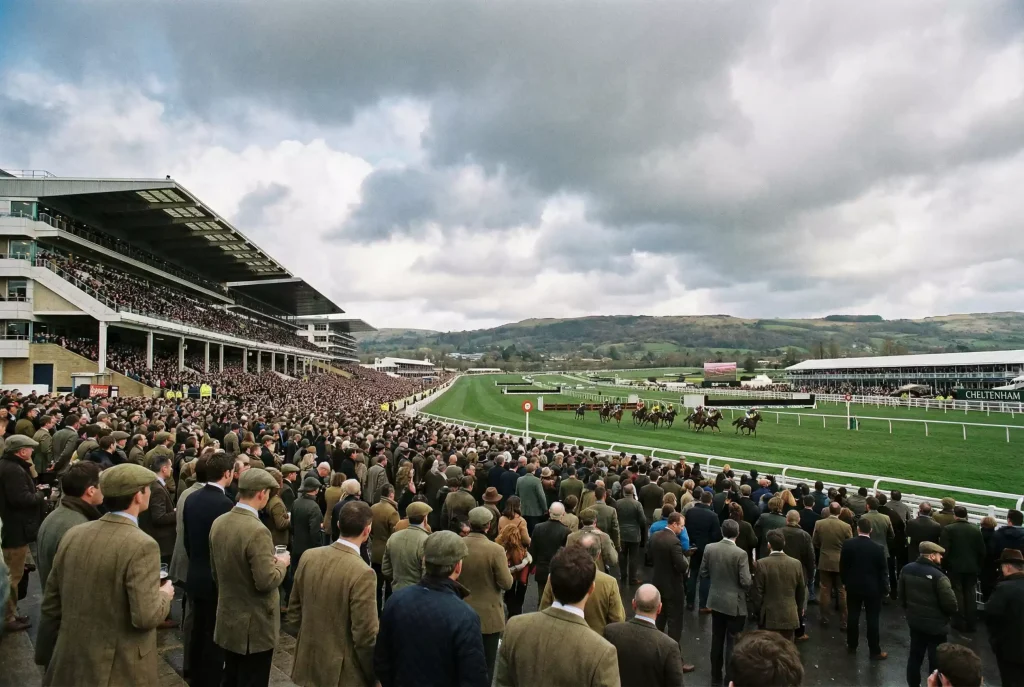
The Greatest Show in Jump Racing
Four days in March. Twenty-eight races. The finest jumps horses from Britain, Ireland, and beyond converging on a Cotswolds amphitheatre. The Cheltenham Festival is the ultimate test of jump racing prowess, and for punters, it represents both extraordinary opportunity and significant risk. The betting turnover dwarfs any other meeting in the calendar, and the intensity of competition means favourites fail regularly while outsiders land at eye-catching prices.
Cheltenham rewards the prepared. Those who spend the winter tracking form, monitoring trial races, and understanding the specific demands of each course and race type arrive in March with genuine advantages. Those who punt casually based on names and tips join the majority who subsidise the market. This guide covers the strategic approaches that give you the best chance of emerging from the week in profit.
Ante-Post Strategy
Ante-post betting — wagering on Cheltenham outcomes weeks or months before the festival — offers prices significantly more generous than those available on the day. The trade-off: if your selection does not run, the stake is lost. No refunds, no second chances. Managing this risk while capturing value defines successful ante-post strategy.
The best ante-post opportunities arise when you identify horses likely to improve through the season. A novice hurdler impressive in October might be available at 20/1 for the Supreme; by March, that same horse could be 6/1. The key is spotting potential early, before the market adjusts. Trial races in January and February — the Dublin Racing Festival in particular — often clarify form and collapse prices, so the window for genuine ante-post value typically closes by late January.
Selectivity matters enormously. Rather than backing ante-post selections in every race, focus on events where you have genuine insight. Maybe you have followed a particular trainer’s novice chasers all season and identified one that handles the Cheltenham hill exceptionally. Maybe you have spotted a proven stayer whose stamina will be undervalued by a market focused on flashier speedsters. Concentrate your ante-post activity where your analysis creates edge, not where you are simply hoping.
Non-runner risk requires honest assessment. Some horses have injury histories that increase withdrawal probability. Some trainers run lightly and protect horses that show any sign of problems. Others push through minor setbacks. Factoring non-runner probability into your expected value calculation matters — a 10/1 shot with a 20% non-runner risk offers worse value than an 8/1 shot certain to run.
The Dublin Racing Festival in early February provides the most important ante-post information. Form from Leopardstown often translates directly to Cheltenham; horses that win Grade 1 contests there typically hold their form three weeks later. Watching Dublin carefully, and betting quickly when prices lag behind demonstrated ability, captures value that evaporates within hours of results coming in.
Day-by-Day Focus
Tuesday opens the festival with the Champion Hurdle, the two-mile championship that crowns the best hurdler in training. Speed matters here; horses that quicken decisively in the final two furlongs dominate the roll of honour. The Supreme Novices Hurdle follows a similar pattern among first-season hurdlers, rewarding tactical speed over raw stamina. Early form indicators from the International Hurdle and Christmas Hurdle often translate reliably to these races.
Wednesday centres on the Queen Mother Champion Chase, the ultimate test of speed over fences. This race demands perfection — errors are magnified at racing pace, and horses that jump fluently under pressure prevail. The Tingle Creek at Sandown and Clarence House at Ascot provide the key trial form. Mares get their own championship race on Wednesday too, with the Mares Hurdle attracting consistent support from the Willie Mullins squad.
Thursday brings the Stayers Hurdle, the three-mile test where stamina tells. Horses that get the trip emphatically, staying on when others tire, dominate this race. The Cleeve Hurdle at Cheltenham in January serves as the primary trial, often featuring many of the same principals. The Ryanair Chase sits at an intermediate distance, attracting horses not quite staying the Gold Cup trip but too slow for the Champion Chase.
Friday culminates with the Gold Cup, the championship chase over three miles and two furlongs. This is the race that defines careers — stamina, class, and jumping excellence all matter. The King George at Kempton provides important form, though its flat track differs from Cheltenham’s undulations. The Irish Gold Cup at Leopardstown often features Gold Cup contenders putting in final preparations. Finishing up the famous Cheltenham hill with ground in their lungs separates true Gold Cup horses from pretenders.
Handicaps pepper each day and often provide the best betting opportunities. The competitive nature of handicaps means favourites fail regularly, and those who have done their homework can find value at double-figure prices. The County Hurdle, Grand Annual, and Martin Pipe Conditional Jockeys Handicap all attract strong fields where any of ten or more horses might win.
Irish vs British Form
Ireland dominates modern Cheltenham. In recent years, Irish-trained horses have won the majority of races, with Willie Mullins alone sometimes accounting for ten or more winners. Understanding this dominance — and where it creates value opportunities — shapes profitable festival betting.
As Tom Byrne, Head of Racing and Betting at the BHA, noted in the 2026/26 Jump Changes briefing: “With only two British-trained horses lining up in the Grade 1 novices chases at the 2026 Cheltenham Festival, it was clear that action was needed to help develop our novice chasers.” This acknowledgment from British racing’s governing body confirms what results have shown for years — Irish horses arrive at Cheltenham battle-hardened from stronger domestic competition.
The market generally respects Irish form appropriately, sometimes excessively. When a Willie Mullins runner shortens dramatically based purely on trainer reputation rather than race-specific suitability, value may exist elsewhere. British-trained horses in handicaps often attract less attention than their form merits, precisely because the Irish raiders dominate headlines.
Cross-referencing form requires care. Irish Grade 1 races attract deeper fields than their British equivalents in many cases, making Irish form harder to assess on face value. A horse finishing third at Leopardstown behind two superstars may outclass a horse that won a weaker British Grade 1. Watching the Irish races yourself, rather than relying on ratings alone, provides context that numbers cannot capture.
Festival Bankroll Management
Four days of intensive betting creates unique bankroll pressures. The temptation to chase losses or increase stakes after winners runs strong in the festival atmosphere. Disciplined bankroll management separates those who emerge from Cheltenham in profit from those who donate to the cause.
Research from the Wharton School found that full Kelly staking — betting the mathematically optimal fraction of bankroll on each wager — led to bankruptcy in 100% of realistic simulations. The festival compresses risk exposure into four days, offering no time for variance to smooth. Conservative staking protects against the ruin that aggressive approaches invite.
Set a total festival budget before Tuesday and divide it sensibly across days. This prevents blowing the entire allocation on early races and having nothing left for Gold Cup day. If Tuesday produces winners, resist the temptation to significantly increase stakes on Wednesday — the information you had has not changed. Similarly, a losing Tuesday should not trigger increased bets to recover. Discipline means sticking to the plan regardless of early results.
Not every race merits a bet. The 28-race card includes some events where forming a strong view is difficult. Skipping races where you have no edge preserves capital for the bets you genuinely fancy. Profitable punters at Cheltenham often bet fewer races than recreational punters — quality of selection matters more than quantity of activity.
Preparation Wins
The festival belongs to those who arrive prepared. The winter months leading to March matter as much as the days themselves — watching trials, tracking stable form, understanding which horses suit which races. Punters who do this work find value; those who arrive hoping to pick winners on the day find disappointment.
Start your analysis months out, refine it through the trials, and arrive in March with clear opinions backed by evidence. Manage your bankroll conservatively, bet selectively, and trust the process even when early results disappoint. The greatest show in jump racing awaits — make sure you are ready for it.
