
All-Weather Racing Betting Guide: UK Synthetic Track Strategies
Best Horse Racing Betting Sites – Bet on Horse Racing in 2026
Loading...
Racing Without the Weather Variable
When British turf courses turn waterlogged or frozen, the all-weather tracks keep racing. Synthetic surfaces at Kempton, Lingfield, Wolverhampton, Newcastle, Southwell, and Chelmsford provide year-round flat racing regardless of conditions outside. For punters, this creates a distinct discipline — one that rewards specialists and punishes those who apply turf racing logic without adjustment.
The Racecourse Association reported average attendance across British courses reaching 3,404 in 2026, a slight increase despite fewer meetings. All-weather racing contributes substantially to that figure, with evening meetings at Kempton and Wolverhampton drawing consistent crowds through winter months when turf racing options dwindle.
All-weather racing offers opportunities that turf purists overlook. The surfaces behave consistently, removing the going variable that dominates turf analysis. Form lines remain reliable over longer periods. And because fewer sharp punters focus on all-weather, the markets occasionally offer value that wouldn’t survive in higher-profile turf racing. All-weather, all opportunity — for those willing to learn the specifics.
Surface Types Explained
Three main surface types operate in British all-weather racing, and each produces different racing dynamics. Understanding these differences shapes how you read form and assess each horse’s suitability.
Polytrack covers Kempton, Lingfield, and Chelmsford. This wax-coated surface provides consistent going regardless of weather, running closest to good turf in its characteristics. Horses that handle fast turf ground typically adapt well to Polytrack. The surface favours horses with tactical speed — those that can quicken in the closing stages rather than grinding through attritional contests.
Tapeta surfaces Newcastle and Wolverhampton. This composite of silica sand, rubber fibres, and wax produces a slightly deeper feel than Polytrack. Some horses that struggle on faster surfaces find Tapeta more forgiving; others labour on it. Newcastle’s Tapeta runs particularly true, while Wolverhampton’s tight turns add an additional variable. Horses that stay well and handle the unique demands of tight-track racing often excel at Wolverhampton.
Fibresand at Southwell represents the most distinctive surface. The sand-based composition rides differently from both Polytrack and Tapeta, often favouring front-runners who can control the pace. Southwell specialists exist — horses that win repeatedly there while struggling elsewhere. Identifying these specialists, and avoiding horses whose turf form won’t translate to Fibresand, separates profitable all-weather punters from those chasing irrelevant form.
Form across surface types doesn’t always transfer. A horse brilliant at Kempton on Polytrack might struggle at Southwell on Fibresand. Treating all-weather tracks as one homogeneous category ignores the genuine differences between surfaces. Track-specific form carries more weight than generic all-weather form.
Track-Specific Biases
Each all-weather track has configuration quirks that create draw biases and running style advantages. Learning these biases provides edges invisible to casual punters studying form without track knowledge.
Lingfield’s tight left-handed turns favour handy horses that can race prominently and hold position through the bends. Wide draws in sprints face disadvantages; horses drawn low can save ground throughout. The straight sprint course, rarely used, produces different dynamics entirely. Studying which draws have won recent races under similar conditions reveals patterns worth betting on.
Wolverhampton’s floodlit arena racing features sharp turns that punish one-paced gallopers. Tactical speed matters here — the ability to quicken from a moderate pace rather than sustaining one long run. Front-runners enjoy success, partly because the track configuration makes coming from behind difficult. Horses that have won at Wolverhampton before deserve respect; debutants face steep learning curves.
Newcastle’s wide, galloping track suits a different type. The long straight and sweeping bends allow hold-up horses to produce late runs successfully. Draw biases depend on field size and going; large fields on soft ground often see far-side advantages. Newcastle attracts higher-quality racing than some other all-weather venues, meaning the form often has substance worth respecting.
Kempton runs right-handed with a relatively sharp home turn that can catch out inexperienced runners. Horses racing prominently have advantages; those needing clear runs from the rear sometimes find traffic problems. The track surface maintenance keeps the going consistent, making historical form reliable over extended periods.
Finding All-Weather Specialists
Some horses transform on artificial surfaces. Moderate turf performers suddenly win with authority when switched to all-weather. These conversions create value — the market prices the horse based on its turf record while the actual ability on this new surface exceeds that assessment.
Look for horses with action suited to the surface. Low, economical movers often handle synthetic tracks better than horses with high knee action that jar on the harder surface. Breeding provides clues too: certain sires produce offspring that excel on all-weather while struggling on turf. Noting which stallions have strong artificial surface records allows you to back their progeny with greater confidence when they switch codes.
Course form trumps generic all-weather form. A horse with three wins at Kempton represents a better bet at Kempton than one with three wins at Southwell. The specialist knows the track, handles the surface, and has proven ability at the specific venue. Course-and-distance winners on all-weather tracks deserve extra respect — they’ve demonstrated everything you need to see.
Track specialists often race repeatedly at their preferred venue. Trainers recognise when a horse handles a specific surface and exploit that preference. Following these patterns — noticing which horses return again and again to the same track — identifies runners that outperform their official ratings at their favoured venue.
Winter Racing Opportunities
Winter all-weather racing presents distinct opportunities. The markets thin out as casual punters turn away from the sport, leaving those who continue to engage with fields composed largely of regulars. The HBLB Annual Report noted betting turnover falling approximately 19% from 2021/22 to 2026/25, but winter all-weather meetings maintain consistent activity from committed punters.
Winter handicaps often feature horses running repeatedly, building form lines that become increasingly reliable. The same faces appear week after week, allowing detailed study of how they perform against each other. New entrants to these consistent fields can be assessed quickly — either they match the established level or they don’t.
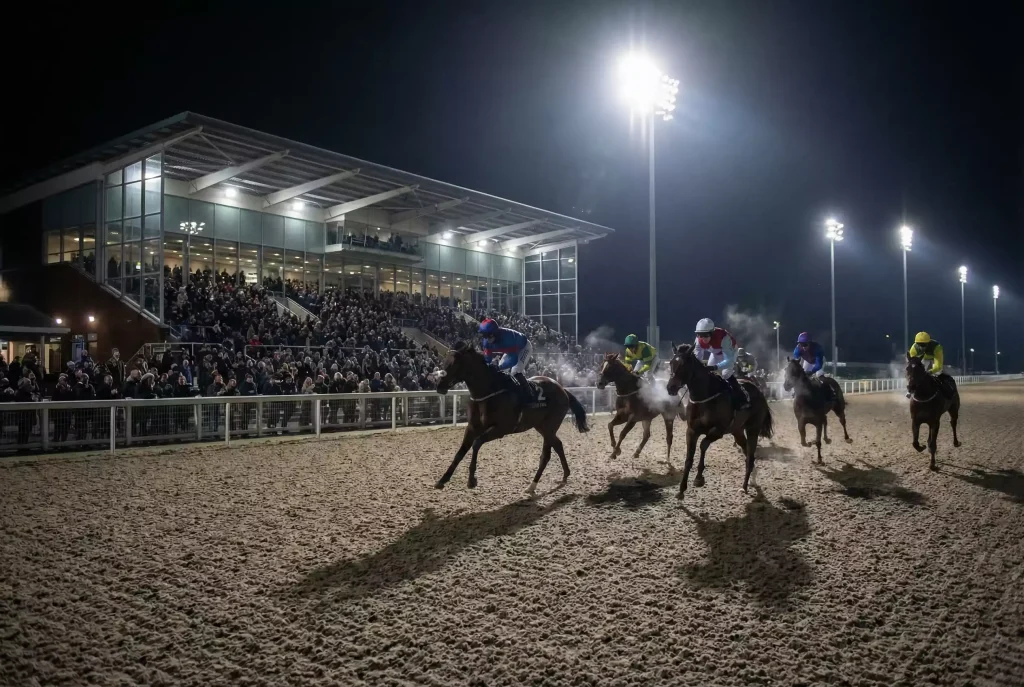
Evening meetings under floodlights carry particular character. Wolverhampton and Kempton host regular evening cards that attract competitive fields despite limited audiences. The horses tend to be genuine all-weather types rather than turf horses filling in between grass campaigns. This genuineness makes the form more meaningful than mixed-code fields where surface suitability varies wildly.
The All-Weather Championships culminate each spring at Lingfield, offering valuable prizes that trainers target throughout winter. Following horses that win qualification points during the season reveals which stables prioritise this programme, providing insight into likely improvers as the finals approach.
The Year-Round Edge
All-weather racing rewards those who treat it as a distinct discipline rather than turf racing’s poor relation. The surfaces differ, the tracks have unique characteristics, and the specialists who thrive on artificial ground form a recognisable population that reappears throughout the year. Learning these specifics creates genuine edge.
Start by focusing on one or two tracks. Learn the draw biases, the running style advantages, and which trainers succeed at those venues. Build knowledge of the specialist horses that perform there regularly. Over time, expand to additional tracks, always respecting the differences between surfaces and configurations. All-weather, all opportunity — but only for punters willing to learn what makes each track unique.