
In-Play Horse Racing Betting: Live Strategies and Race-Reading Skills
Best Horse Racing Betting Sites – Bet on Horse Racing in 2026
Loading...
When the Race Tells Its Own Story
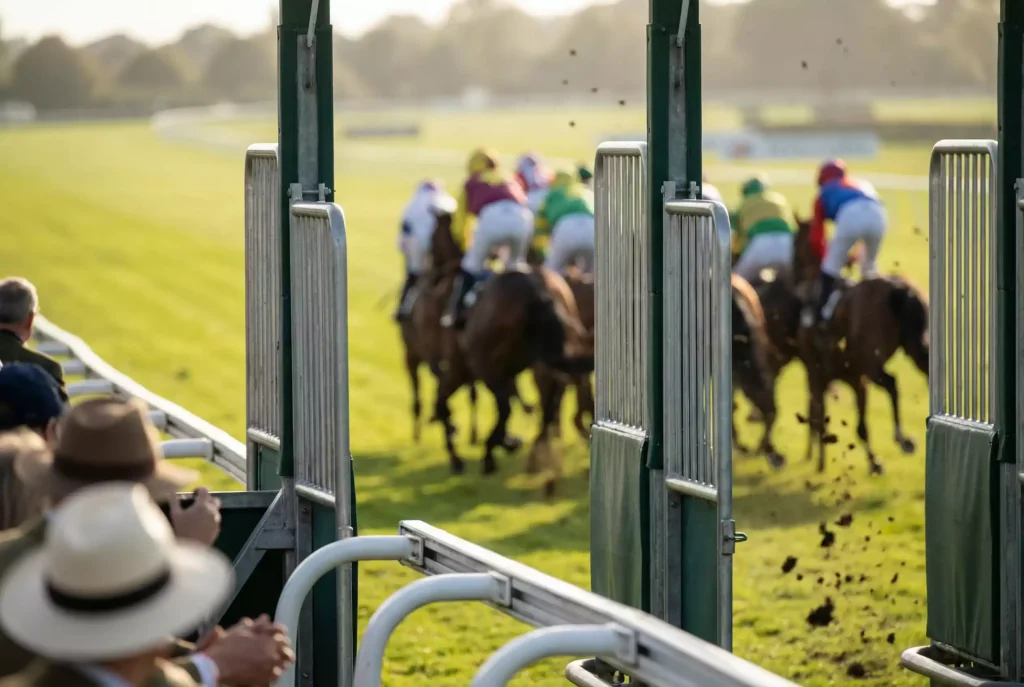
In-play betting transforms horse racing from prediction into observation. Rather than committing stakes before the start and hoping, you watch the race unfold and bet on what you see happening. The horse travelling sweetly on the bridle, the favourite struggling to go the pace, the outsider travelling better than its price suggests — these live observations create betting opportunities that didn’t exist moments before.
The in-play market has grown substantially. According to IBIA and H2 Gambling Capital research, 47% of all global sports betting occurs in-play as of 2026, with projections suggesting 51% by 2028 — representing $47 billion in gross gaming revenue. Horse racing contributes to this trend, with betting exchanges and bookmaker apps enabling live wagering that tracks race dynamics in real time.
In-play racing betting demands different skills from pre-race analysis. You need to read a race as it happens, interpret body language of horses and jockeys, assess pace scenarios, and execute bets within seconds. The race tells the story live — your job is to read that story faster and more accurately than the market.
Race-Reading Fundamentals
Reading a race in-running starts with understanding how horses move when things are going well versus when they’re struggling. A horse on the bridle — responding to the rider’s hands rather than being pushed — is travelling within itself, with reserves to call upon. A horse off the bridle, being scrubbed along or pushed early, is already under pressure and may have little left when the serious racing begins.
Position tells you where each horse sits relative to the pace. Leaders set the tempo and control the race but tire faster. Midfield runners save energy but risk traffic problems. Hold-up horses conserve most energy but depend on gaps appearing at crucial moments. As the race unfolds, assess whether each horse’s position matches its typical running style. A front-runner tracking the pace rather than leading might be saving something; equally, it might be struggling to go the genuine pace.
Watch jockey body language. Experienced jockeys sit still when their horse is travelling well, moving only when necessary. When you see a jockey becoming busy — hands moving, heels driving — the horse is being asked for effort. If this happens early in the race, it often signals trouble. If it happens in the final stages with the horse responding, it signals commitment to a serious run.
The final furlong reveals everything. Horses that travel smoothly but fail to quicken when asked aren’t finishing the race; their earlier promise proved deceptive. Horses that come alive in the closing stages, accelerating when others tire, demonstrate the finishing ability that wins races. Learning to spot which horses have more to give — and which are already running on empty — creates in-play opportunities as prices fail to reflect the true picture.
Timing Your Bets
In-play timing matters as much as selection. Bet too early and you commit before crucial information emerges. Bet too late and the price has already moved to reflect what you’ve observed. Finding the window where your observation provides edge — before the market fully prices it in — defines successful in-play betting.
Different race stages offer different opportunities. Early in long-distance races, horses settle into rhythm and positions. This phase rarely produces actionable information unless something clearly goes wrong. Mid-race, the pace scenario becomes apparent — is it slow, moderate, or genuinely quick? This context shapes which running styles are likely to succeed. The final stages provide the clearest picture but leave least time to act.
Some bettors specialise in specific windows. Backing horses at the halfway point when they’re travelling well but haven’t yet been asked for effort captures value before the market recognises the threat. Others focus on the final furlong, taking short prices on horses that are clearly winning but haven’t yet crossed the line. Each approach has merit; the key is consistency rather than switching between strategies randomly.
Latency affects execution. The delay between your screen and reality varies by platform and connection. By the time you see a horse quicken and attempt to back it, the price may have already shortened. Practicing with small stakes reveals your actual execution speed and the typical slippage between intended and achieved prices. Factor this reality into your assessments — if you consistently miss the best prices, adjust your strategy accordingly.
Platform Comparison
Betfair’s exchange dominates in-play horse racing markets. The liquidity — the amount of money available at each price — typically exceeds what bookmakers offer, allowing larger bets without moving the market. The ability to both back and lay provides flexibility: you can back a horse you fancy, then lay it later to lock in profit or limit losses regardless of the final result.
Traditional bookmaker apps have improved their in-play offerings substantially. Most major firms now offer live betting on horse racing with competitive prices and reasonable limits. The interface tends to be simpler than exchange trading, suiting punters who want to back selections without learning the exchange’s additional complexities. However, prices update more slowly than on exchanges, and maximum stakes are often restricted.
Richard Hayward, Managing Director at Betfair, announced changes to commission structures in 2026: “This change greatly reduces the number of customers who will pay any additional fees and is the first of many improvements coming for the exchange in 2026.” (Racing Post) These commission adjustments affect in-play profitability — active traders should understand the fee structure and how it impacts net returns.
Cash-out features across both platforms allow you to take profit or cut losses before the race finishes. The offered cash-out price includes a margin, meaning you receive less than mathematical value. This convenience has a cost. For disciplined traders, manually laying off positions on exchanges often proves more economical than accepting automated cash-out prices, though it requires faster execution and deeper understanding of the mechanics.
Risk Management Live
In-play betting can accelerate losses as quickly as it can generate profits. The rapid pace encourages reactive rather than strategic betting. Without discipline, punters chase losses during a single race, compound errors across a card, and destroy bankrolls in sessions that should have been abandoned hours earlier.
Set session limits before you begin. Decide the maximum you’ll lose in a single session and stop if you reach it. The temptation to continue — to “get it back” with one more race — destroys more punting banks than poor selection ever could. Walking away from a losing session preserves capital for future opportunities when your judgment isn’t clouded by frustration.
Stake sizing remains crucial. In-play markets move fast, and the temptation to chase better prices with larger stakes proves difficult to resist. Maintain your usual staking discipline regardless of how the race unfolds. If your standard bet is £10, don’t suddenly fire £50 because you’re confident about what you’re seeing. Confidence doesn’t eliminate variance; it just makes the inevitable losses larger.
Track your in-play results separately from pre-race betting. You might discover you’re profitable pre-race but lose that profit in-play, or vice versa. This data informs where to focus your activity. If in-play betting consistently loses money despite feeling exciting, the honest response is reducing or eliminating in-play activity entirely. Profitability matters more than excitement.
The Live Advantage
In-play betting offers genuine advantages for those who develop race-reading skills and execute with discipline. Watching how races unfold provides information unavailable before the start, and acting on that information creates opportunities the pre-race market couldn’t price correctly.
Start with observation before committing stakes. Watch races in-running without betting, practicing your reading skills and noting what you would have bet and when. This practice reveals whether your observations actually predict outcomes or simply reflect hope. When observation consistently precedes correct predictions, you’re ready to introduce stakes — small ones at first, scaling only as profitability proves sustainable over meaningful sample sizes.